

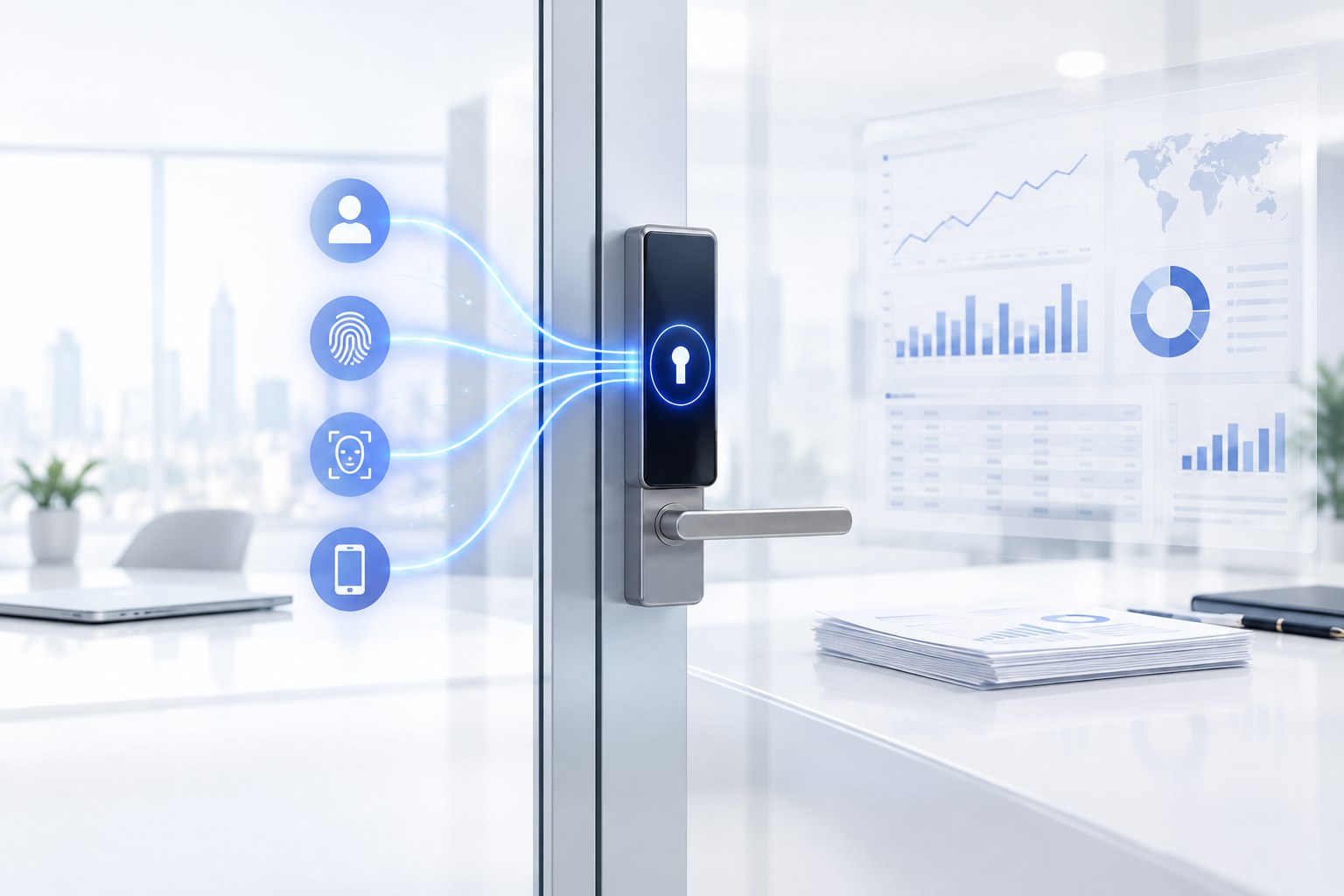

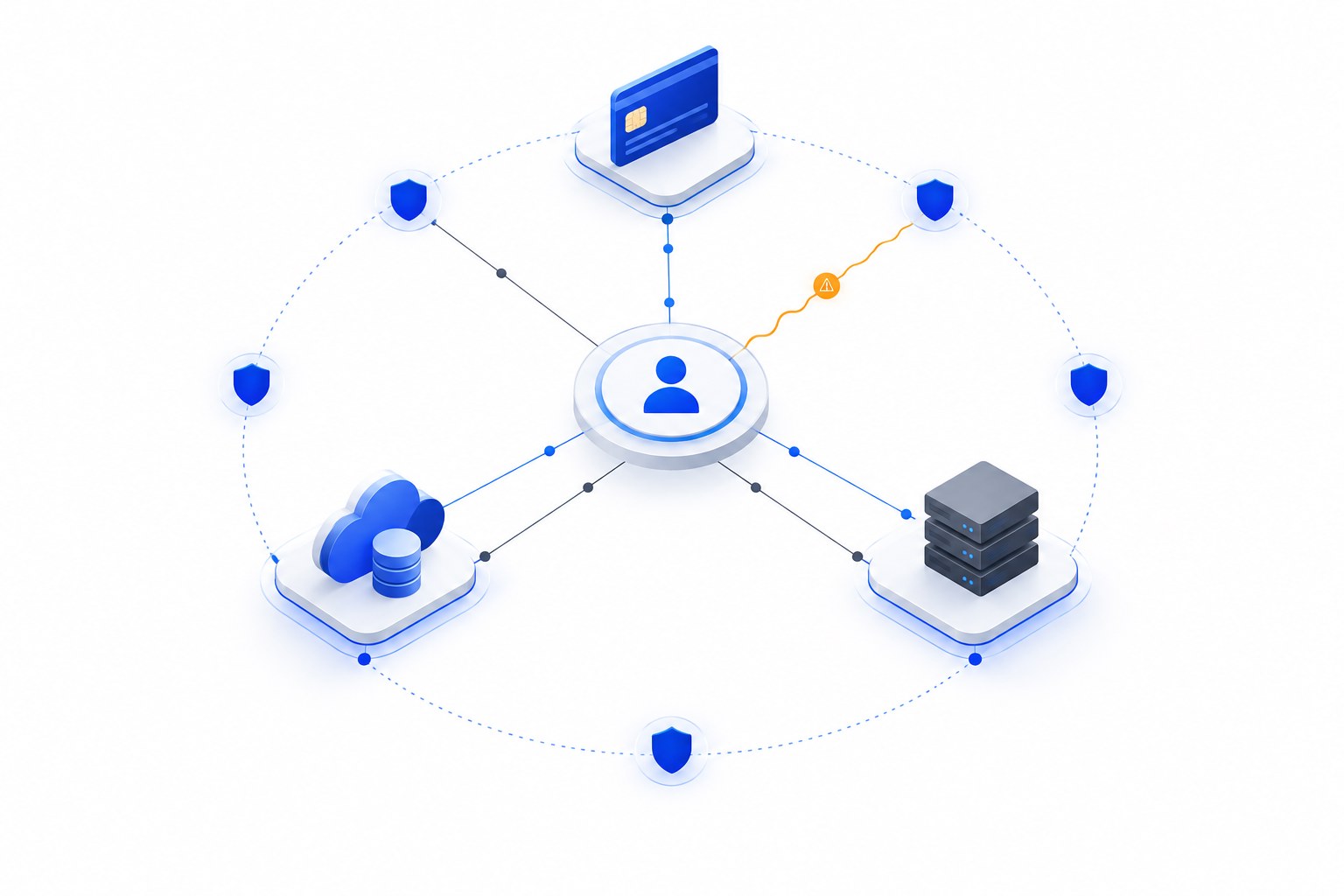
Executive takeaway: Credential theft is not simply a password problem. When someone uses a legitimate employee or administrator account without authorization, the business may face fraudulent payments, exposed information, disrupted operations, and a difficult investigation. The goal is not just to keep attackers out. It is to limit what a compromised identity can do, recognize misuse quickly, and contain it before business damage spreads.
Imagine an accounts payable employee receives an email from a long-standing supplier asking for a new bank account to be used on the next payment. The message comes from the supplier’s real email account, refers to a genuine invoice, and sounds perfectly ordinary. The employee approves the change. The payment goes to a criminal.
There may have been no ransomware, no visibly infected computer, and no obvious system outage. The attacker needed only access to a trusted identity and enough context to make a fraudulent request believable.
What is credential theft, and why should executives care?
Credential theft is the unauthorized acquisition of information or authentication material that allows someone to impersonate a legitimate user. That might mean a stolen password, a captured verification code, or a stolen browser session that gives access without a new login.
For leadership, the issue is business authority. An identity can open financial records, authorize payments, read client correspondence, change cloud settings, or reach sensitive applications. A criminal using a valid account may initially appear to be an ordinary employee performing ordinary work.
The consequences may include payment fraud, compromised contracts or intellectual property, operational delays, privacy investigations, strained customer relationships, and the cost of determining what happened. The FBI has documented business email compromise schemes involving legitimate email accounts and fraudulent transfer requests, underscoring why this is a business process risk as well as a technology risk. Read the FBI’s business email compromise advisory.
Why isn’t multifactor authentication always enough?
Multifactor authentication (MFA) is essential, but the type matters. A code typed into a convincing fake sign-in page can sometimes be relayed to the real service. Repeated push requests can also pressure or trick someone into approving an unexpected sign-in. A criminal who steals an authenticated session may not need to enter the password or complete another MFA challenge at all.
Phishing-resistant authentication, including appropriately configured FIDO2 security keys and passkeys, uses cryptographic safeguards that bind sign-in to the legitimate service. That makes fake-login-page attacks substantially harder. NIST distinguishes these methods from passwords and manually entered one-time codes, which are not phishing-resistant. See NIST’s digital identity guidance.
For most organizations, a sensible rollout starts with the accounts whose compromise would cause the greatest harm: administrators, executives, finance staff, and people with access to highly sensitive information. The right configuration and rollout depend on applications, devices, licensing, and the business’s operating requirements. No authentication method eliminates every threat.
Four identity security gaps that turn a stolen login into a business incident
1. Accounts have more access than their jobs require
Permissions tend to accumulate as employees change roles, teams add applications, and temporary projects become permanent. When an overprivileged identity is compromised, the attacker may inherit access unrelated to the employee’s current responsibilities.
Business outcome: Regular access reviews and least-privilege practices reduce the amount of information and the number of systems exposed through one compromised account. Departing employees, dormant identities, contractors, and service accounts deserve explicit attention.
2. Suspicious sign-ins are detected, but nobody owns the response
An alert has little business value if it sits in a dashboard while teams debate responsibility. Unusual locations, impossible travel, unexpected MFA changes, unfamiliar devices, suspicious mailbox rules, and abnormal access to data can all merit investigation. Any one signal may have an innocent explanation; the important capability is to evaluate context and act.
Business outcome: Define who receives identity alerts, what warrants escalation, and who can suspend access when the evidence justifies it. Measure investigation and containment times, not merely the number of alerts generated.
3. The company trusts email as proof of payment authority
An authentic-looking message, even from a genuine compromised account, is not independent verification. Financial changes are particularly vulnerable because the attacker can exploit past correspondence, names, deadlines, and existing relationships.
Business outcome: Require verification of changes to bank details or payment instructions using a previously established contact method, not a telephone number supplied in the questionable message. Add approval separation for material transactions. This aligns with FBI recommendations to verify payment changes through a known phone number or in person.
4. The response plan ends with a password reset
Changing a password may be necessary, but it may not end an unauthorized session or undo malicious changes. Depending on the incident, responders may need to block sign-in, revoke refresh tokens and sessions, remove unauthorized MFA methods, investigate mailbox forwarding or application grants, inspect affected devices, and review what data or actions the account could access.
Microsoft’s Entra emergency access-revocation guidance explains that the time needed to remove access depends on the tokens, applications, and session mechanisms involved. In particular, some application-issued sessions are controlled by the application itself. Containment needs to be verified, not assumed.
What should a practical business identity security program include?
- An inventory of high-impact identities. Know who can move money, change infrastructure, administer Microsoft 365 and other cloud services, or retrieve sensitive information. Include nonhuman and third-party access.
- Strong sign-in safeguards. Prioritize phishing-resistant MFA where feasible, restrict legacy authentication where applicable, and apply appropriate access conditions and device requirements.
- Right-sized permissions. Review access after role changes, quickly remove unnecessary privileges, and give administrators separate, tightly controlled privileged identities when appropriate.
- Identity monitoring connected to action. Establish coverage for risky logins, unexpected privilege changes, suspicious mailbox activity, and account recovery changes, with named responders and escalation authority.
- Independent transaction controls. Require out-of-band verification and approval procedures for financial or sensitive-data requests, even when a request appears to come from someone trusted.
- Tested compromise procedures. Practice account containment, session revocation, application-specific access checks, investigation, notification decisions, and safe restoration of access.
These controls work best as a coordinated program. Buying separate identity, email, and monitoring tools without clarifying who acts on their findings can recreate the cybersecurity tool-sprawl problem: plenty of technology, but an incomplete operational picture.
Five questions a CEO or CFO can ask this week
- Which ten accounts could cause the most financial or operational harm if compromised? Does the team know, or would it need to investigate?
- Are our administrators and payment approvers using phishing-resistant MFA? If not, what is the plan and timeline?
- Who investigates a suspicious Microsoft 365 or cloud login after business hours? How quickly can that person act?
- If we discover a compromised executive account, can we contain it across connected applications? When did we last test that process?
- Can a single email request change the destination of a supplier payment? What independent verification is required?
None of these questions requires an executive to become a security engineer. They require the organization to connect cybersecurity controls to ownership, financial exposure, and business continuity.
How Ntreks approaches identity security as an MSSP
At Ntreks, our cybersecurity-first managed security services approach starts with the business impact of a failure, not a product demonstration. We help organizations evaluate identity exposure, Microsoft 365 and cloud configuration, privilege management, security monitoring, and incident-response readiness. Where appropriate, we also look for opportunities to coordinate or simplify existing tools rather than adding another disconnected dashboard.
That approach is consistent with our broader view of business continuity and ransomware recovery: protection is only part of the job. The organization must also know how it will detect a problem, contain the damage, maintain essential functions, and recover safely.
Our aim is a more defensible operating position: clearer accountability, fewer unnecessary exposures, faster decisions during incidents, and security investments that support the business.
Frequently asked questions about credential theft
Can a business account be compromised even with MFA enabled?
Yes. MFA significantly improves protection, but some methods can be phished or socially engineered, and an attacker may misuse an already-authenticated session. Phishing-resistant MFA, session safeguards, and monitoring provide complementary protection.
Does changing a stolen password immediately remove an attacker?
Not necessarily. Existing sessions and application-issued tokens may remain usable for some period. A documented response should address session revocation, connected applications, unauthorized changes, and validation of containment.
Is credential theft only an IT department problem?
No. It can affect payments, customer data, contractual obligations, and business operations. Finance procedures, management approval rules, human resources, and leadership all have a role in reducing the harm.
What should a company do first to reduce credential theft risk?
Identify its highest-impact accounts, verify that MFA is enabled and appropriately strong, reduce unnecessary privileges, assign ownership for suspicious sign-ins, and test how a compromised account would be contained.
Next step: If your organization is unsure which identities carry the greatest exposure or whether its current tools provide actionable visibility, talk with Ntreks about a security and identity review. We will start with the business risks that matter to you.