

Understanding the Difference Between MDR and EDR

MDR vs EDR is a common cybersecurity comparison because Managed Detection and Response (MDR) and Endpoint Detection and Response (EDR) are closely related concepts, but they are not the same thing. EDR is a security technology designed to detect, investigate, and respond to suspicious activity on endpoints, while MDR is a managed security service that combines technology with continuous monitoring, human expertise, investigation, and response.

EDR can provide powerful visibility into activity occurring on workstations, servers, and other endpoints. However, the technology still needs to be monitored, investigated, and managed. MDR helps address that operational requirement by providing security professionals who monitor security activity, investigate potential threats, and respond when suspicious activity requires action.

For small and mid-sized businesses, understanding the difference between MDR and EDR is important when determining whether security technology alone is sufficient or whether the organization also needs ongoing security monitoring and response expertise.

Key Takeaways

What You Need to Know

  • EDR is a security technology designed to detect, investigate, and respond to suspicious activity occurring on endpoints such as workstations and servers.
  • MDR is a managed cybersecurity service that combines security technology with continuous monitoring, human investigation, threat validation, and response.
  • EDR can be an important component of an MDR service, but deploying EDR does not automatically provide the monitoring and security expertise associated with MDR.
  • Organizations using EDR still need people and processes to review alerts, investigate suspicious activity, determine whether a real threat exists, and respond appropriately.
  • For businesses without a dedicated security operations team, MDR can help provide the expertise and continuous monitoring needed to operate detection and response technologies effectively.

What Is Endpoint Detection and Response (EDR)?

Endpoint Detection and Response (EDR) is a security technology designed to continuously monitor endpoints such as workstations and servers for suspicious behavior, malicious activity, and indicators of compromise.

EDR platforms collect and analyze activity from endpoints so security teams can identify unusual behavior, investigate security events, and take response actions when a threat is detected.

What EDR Typically Provides

EDR commonly provides endpoint visibility, behavioral monitoring, threat detection, alerting, investigation tools, and response capabilities such as isolating a device or stopping a malicious process.

The strength of EDR is the depth of visibility it can provide into endpoint activity. However, when considering MDR vs EDR, the technology itself does not eliminate the need for people to monitor alerts, investigate suspicious behavior, and decide what actions should be taken.

Where EDR Fits in an MDR vs EDR Cybersecurity Strategy

EDR is an important layer of endpoint security, but it is only one part of a broader cybersecurity strategy. Businesses may also need protection and monitoring across identities, email, Microsoft 365, cloud services, networks, backups, and other critical systems.

This distinction is important when comparing EDR with MDR. EDR provides technology and endpoint visibility, while MDR provides an ongoing managed service designed to monitor, investigate, and respond to security threats.
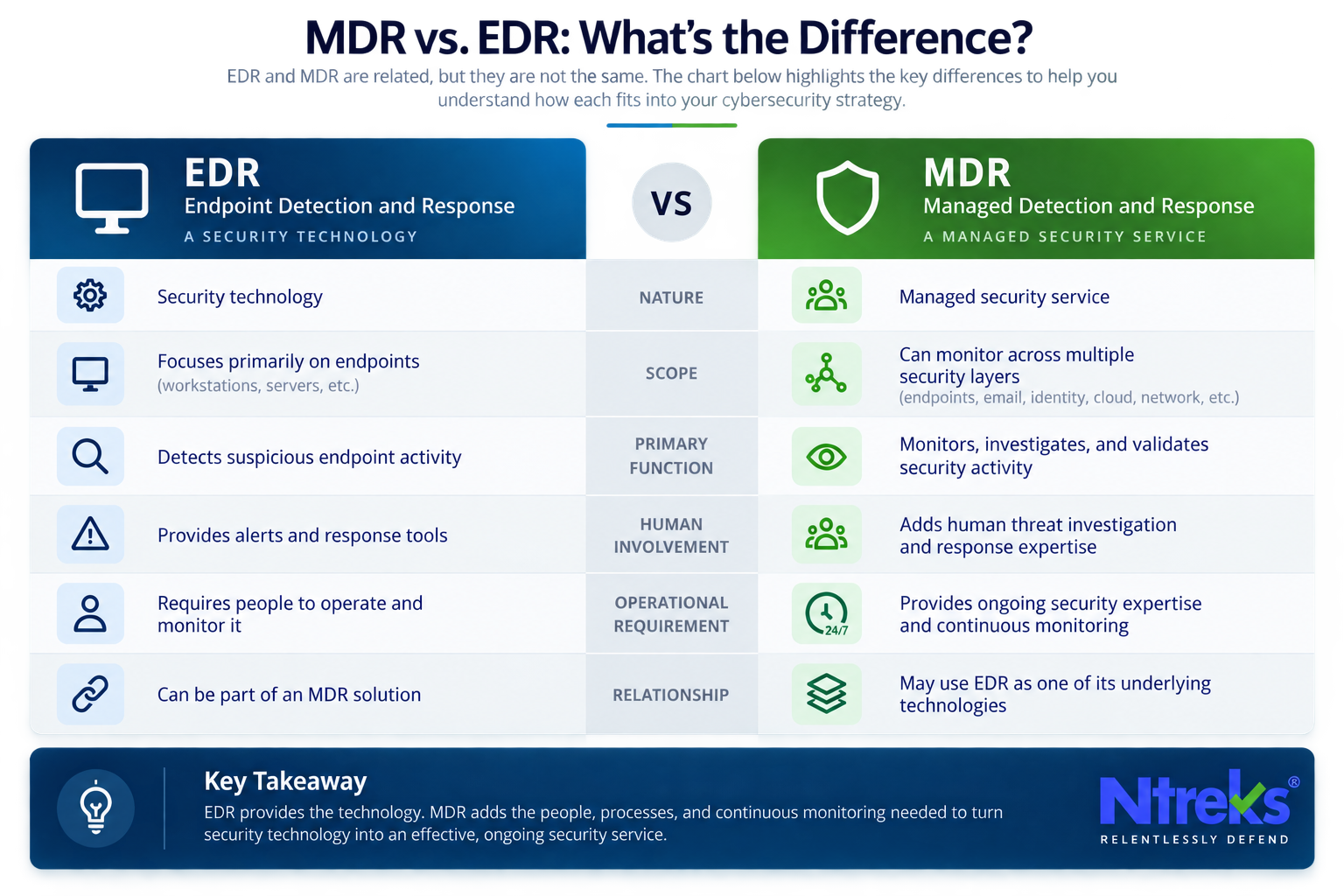
MDR vs. EDR comparison showing the differences between Managed Detection and Response and Endpoint Detection and Response.

Important Point

EDR Technology Still Needs People and Process

EDR can provide powerful endpoint visibility and response capabilities, but the technology does not operate itself. Security alerts still need to be reviewed, suspicious activity investigated, threats validated, and response actions coordinated. This is one of the key differences between EDR and MDR: MDR adds the continuous monitoring and human security expertise required to operate detection and response technologies as an ongoing service.

Explore the Topic

Managed Detection & Response

Learn more about how Managed Detection and Response helps businesses continuously monitor for cyber threats, investigate suspicious activity, respond to confirmed incidents, and strengthen their overall security operations.

Explore Managed Detection & Response →

Frequently Asked Questions

Find answers to common questions about the difference between Managed Detection and Response and Endpoint Detection and Response.

What is the main difference between MDR and EDR?

EDR is a security technology focused on detecting and responding to suspicious activity on endpoints such as workstations and servers. MDR is a managed cybersecurity service that combines security technology with continuous monitoring, human investigation, threat validation, and response.

Does MDR replace EDR?

Not necessarily. EDR is often one of the technologies used within an MDR service. MDR adds the people, processes, monitoring, investigation, and response capabilities needed to operate detection technologies as an ongoing security service.

Can a business use EDR without MDR?

Yes. A business can deploy EDR independently, but someone still needs to monitor alerts, investigate suspicious activity, validate threats, and coordinate response actions. Organizations with limited internal security resources may find that MDR provides the operational support needed to use EDR effectively.

Is MDR only for large organizations?

No. MDR can be particularly valuable for small and mid-sized businesses that need continuous security monitoring and response capabilities but do not have the resources to build and staff an internal Security Operations Center.

How can Ntreks help businesses evaluate MDR and EDR?

Ntreks can help businesses assess their current endpoint security, monitoring capabilities, internal security resources, and response requirements to determine whether EDR alone is sufficient or whether a managed detection and response approach is more appropriate.