
What Is Endpoint Detection and Response (EDR)?
Endpoint Detection and Response (EDR) is a security technology designed to continuously monitor endpoints such as workstations and servers for suspicious behavior, malicious activity, and indicators of compromise.
EDR platforms collect and analyze activity from endpoints so security teams can identify unusual behavior, investigate security events, and take response actions when a threat is detected.
What EDR Typically Provides
EDR commonly provides endpoint visibility, behavioral monitoring, threat detection, alerting, investigation tools, and response capabilities such as isolating a device or stopping a malicious process.
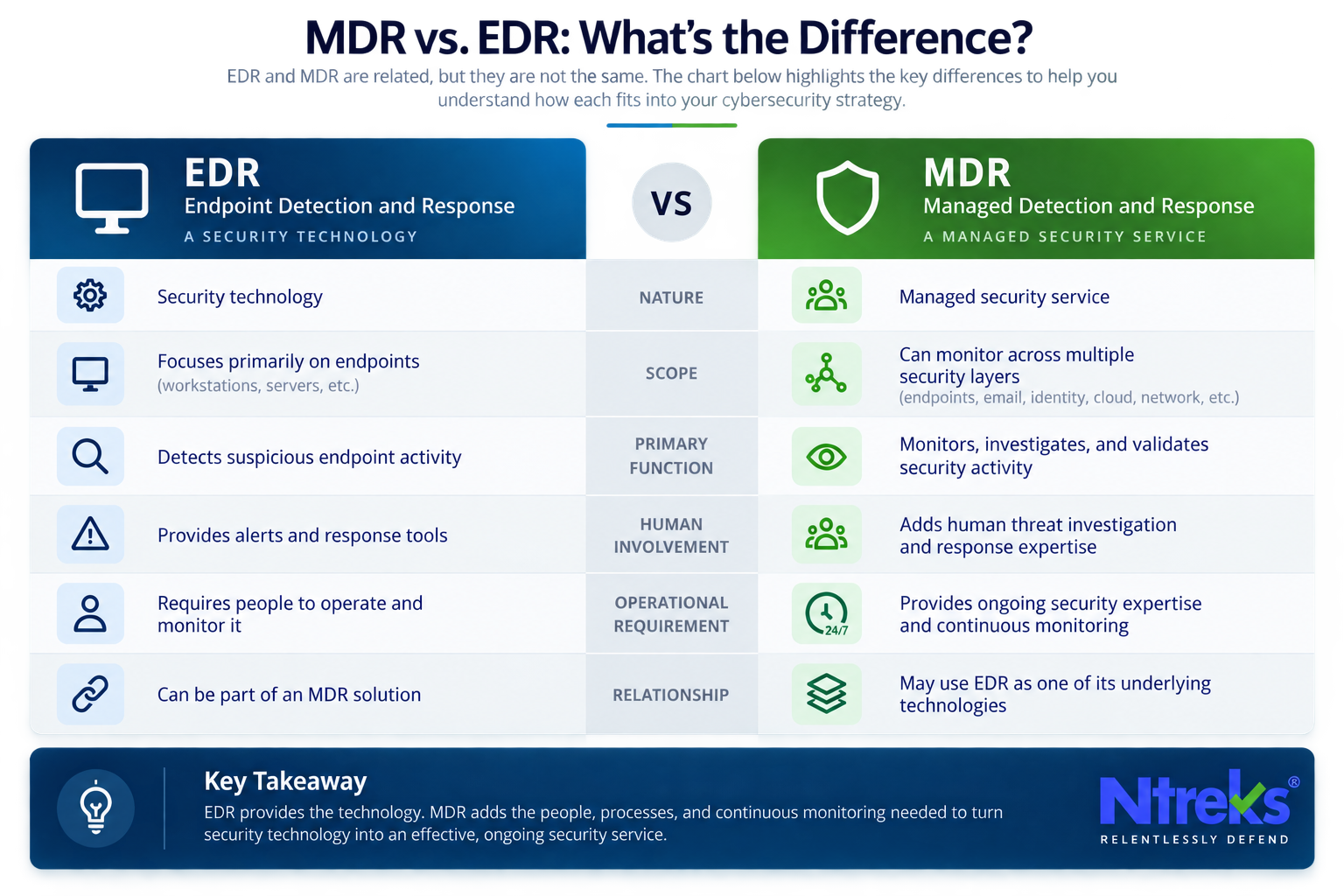
The strength of EDR is the depth of visibility it can provide into endpoint activity. However, when considering MDR vs EDR, the technology itself does not eliminate the need for people to monitor alerts, investigate suspicious behavior, and decide what actions should be taken.
Where EDR Fits in an MDR vs EDR Cybersecurity Strategy
EDR is an important layer of endpoint security, but it is only one part of a broader cybersecurity strategy. Businesses may also need protection and monitoring across identities, email, Microsoft 365, cloud services, networks, backups, and other critical systems.
This distinction is important when comparing EDR with MDR. EDR provides technology and endpoint visibility, while MDR provides an ongoing managed service designed to monitor, investigate, and respond to security threats.